

One experiment, three flours, and one of the best loaves of bread I’ve ever eaten
There’s a moment when fresh bread comes out of the machine and the whole kitchen changes.
You tell yourself you’ll let it cool properly. You know you should. Every baker says so. But somewhere between the smell and the sound of the crust settling, discipline disappears. The knife comes out. Butter follows. Science gives way to curiosity.
This loaf started with a simple question.
For years I had been buying expensive organic stoneground flour. Beautiful flour. Carefully milled. Carefully shipped. Carefully priced.
But was it actually making better bread?
Or was I mostly paying for distance and branding?
So I decided to start again using flour I could buy locally. Nothing exotic. Nothing complicated. Just practical ingredients and a bread machine that had already earned its place on the bench.
Home baked bread has one enormous advantage.
You know exactly what is in it.
No long ingredient lists. No mysterious conditioners. No preservatives designed to make bread behave like packaging foam three days later.
Just flour, water, yeast, oil, and time.
 Three Flours, One Balance
The blend turned out to matter more than expected.
Strong Red bakers flour gives strength and lift. Bakers flour softens the crumb so it slices cleanly. Organic buckwheat adds flavour and nutrition, but it has no gluten at all. Too much and the loaf simply refuses to stand up.
- Getting that balance right took a few attempts.
- The reward was immediate.
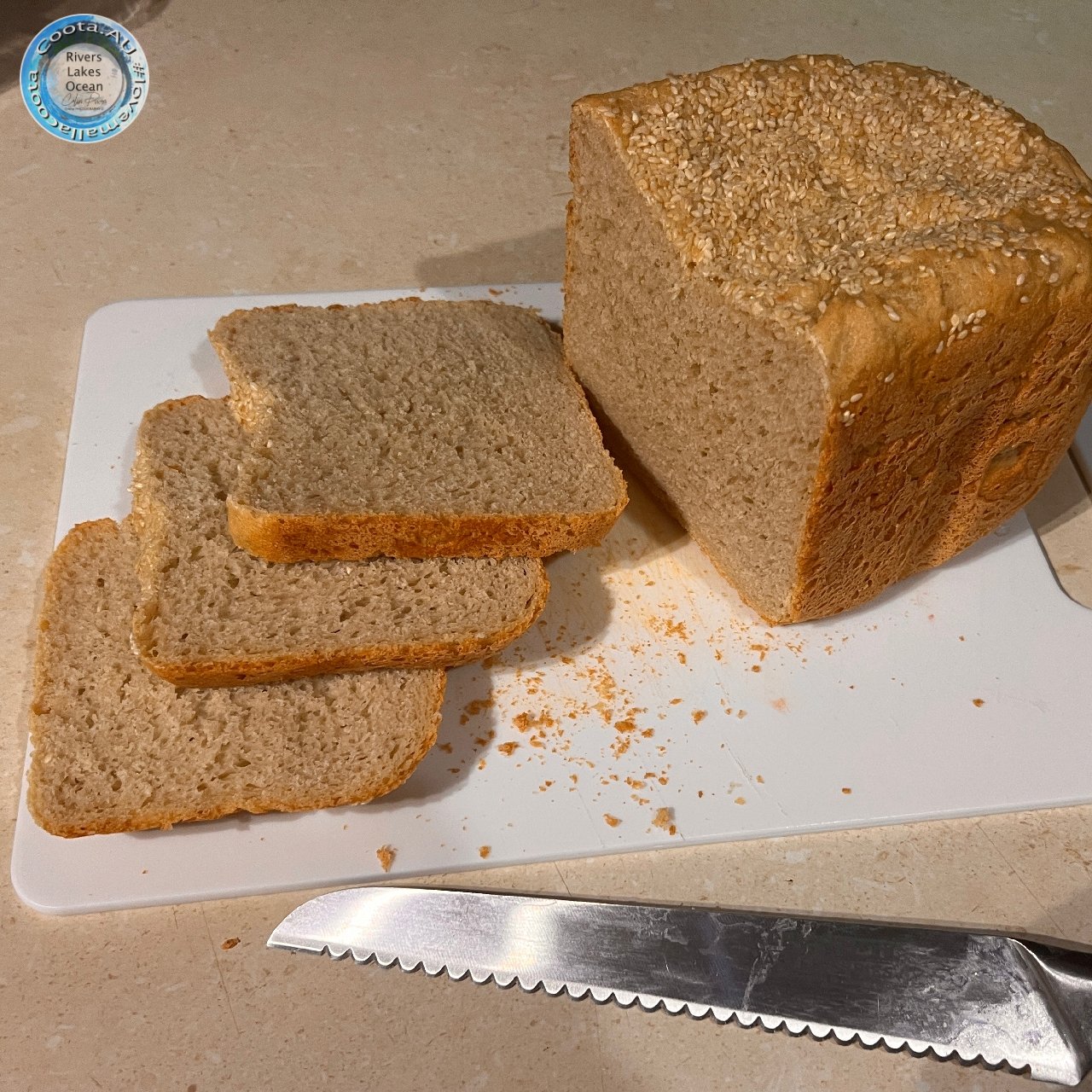
A loaf that felt substantial in the hand. Firm without being heavy. Rustic without being dense.
 The Overnight Discovery
The real change came from slowing things down slightly.
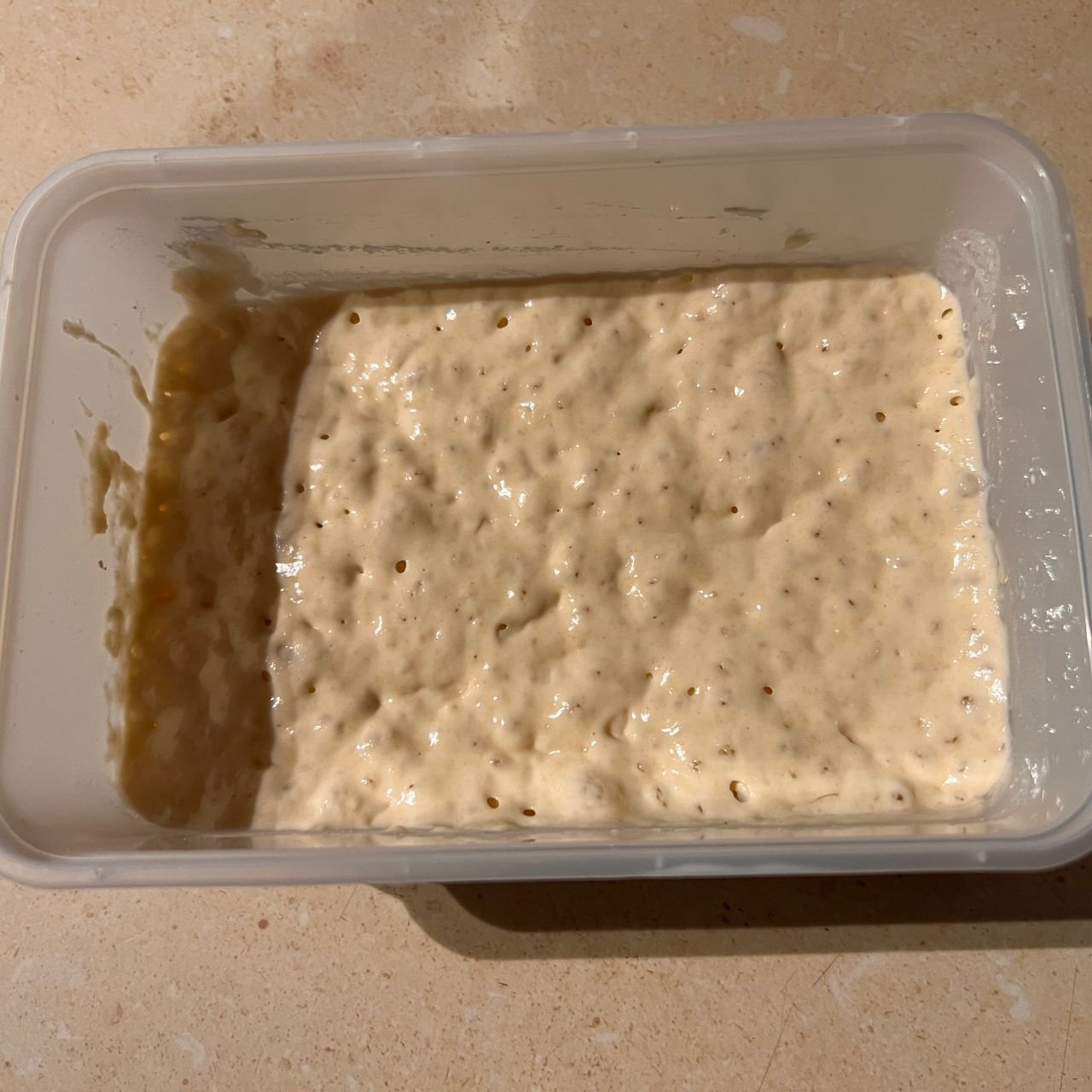
Instead of asking the bread machine to do everything, a small sponge was mixed the night before.
- Just flour, water and a pinch of yeast.
- Covered loosely and left on the bench overnight. Sometimes longer.
- By morning it bubbles gently and smells faintly nutty, almost like yoghurt.
- No sourdough starter.
- No feeding schedules.
- Just time doing the work quietly.
- That small step transforms flavour completely.
 Bread Machine Lessons Learned
There is one rule every bread machine owner eventually discovers.
- Liquids go in first.
- Water.
- Oil.
- Vinegar.
- Then flour.
Ignore this and you eventually discover a stubborn lump of dry flour hiding in a corner after baking.
Ask me how I know.
The dough gets a quick check five minutes into kneading. It should form a smooth ball with just a little tackiness underneath.
The final rise happens at about the two hour mark.
That is when the top gets brushed lightly with milk and sprinkled with sesame seeds before the bake begins.
Then the machine is left alone to do its work.
 The Result
Without exaggeration, this is one of the best loaves of bread I have ever had.
- Hot and fresh it has a firm sourdough-like texture without the effort of maintaining a starter.
- The crust is properly crunchy.
- The crumb elastic and clean slicing.
- Buckwheat gives a subtle nutty depth rather than heaviness.
- Over the next few days it kept beautifully. No rapid drying. No collapse into softness.
- And the toast.
- Sensational.
- Golden edges. Deep aroma. Butter disappearing instantly into the surface.
Breakfast quietly became something to look forward to again.
 The Practical Question: Cost $1.50
Using locally bulk (12.5kg) purchased flour:
The flour component works out at roughly one dollar and ten cents ($1.10) per loaf.
Including yeast, oil and electricity the finished loaf sits around one dollar forty to one dollar fifty.
Comparable commercial bakery sourdough sells for seven to nine dollars.
Sometimes simplicity wins twice.
 Colin’s Coota Bread Recipe
Overnight Sponge
• 100 g bakers flour
• 100 g water
• 1 g yeast
Cover loosely and leave overnight or up to 24 hours.
Bread Machine Ingredients (Total Flour 475 g)
Liquids first into pan:
• 200 g water
• 15 g olive oil
• 4 g apple cider vinegar
Add sponge.
Then flour:
• 175 g Strong Red flour
• 130 g bakers flour
• 70 g buckwheat flour
Add:
• 6 g salt
• 5 g sugar or honey
• 4 g yeast.
Optional additions after first knead:
• linseed
• sunflower seeds
• rolled oats.
Bake
Standard cycle about 3 hours 11 minutes.
After five minutes check dough ball.
At final rise (about two hours):
Brush milk lightly over the top.
Sprinkle sesame seeds.
Let the machine finish.
Home baked is not complicated.
It just asks for a little patience.
And sometimes the simplest experiments turn into habits worth keeping.
Summary:
Bread Machine Ingredients
Total Flour = 475 g
Liquids FIRST into machine pan
200 g water
15 g olive oil (1 tablespoon)
4 g apple cider vinegar (1 teaspoon).
Add Sponge
Tip the entire overnight sponge into the machine.
Add Flour
175 g Strong Red bakers flour
130 g bakers flour
70 g buckwheat flour.
Add Remaining Ingredients
6 g salt (1 teaspoon)
5 g sugar or honey (1 teaspoon)
4 g yeast (1 teaspoon).
Optional Add-Ins (after first knead)
Add using teaspoons if desired:
linseed
sunflower seeds
rolled oats.
If adding oats or linseed add about 10 to 15 g extra water.
Machine Settings
Standard bread cycle.
Approx 3 hours 11 minutes.
After about 5 minutes of kneading:
Check dough.
You want:
smooth dough ball
slightly tacky underneath.
Add a tablespoon of water if dry.
 Final Rise Finish
At about 2 hours (start of bake phase):
Brush lightly with milk.
Sprinkle sesame seeds.
Close lid and allow bake to finish.
 Result
Firm crust.
Elastic crumb.
Keeps several days.
Outstanding toast.




0 comments